
This article originally appeared in the spring 2026 issue of WaterWatch of Oregon’s Instream newsletter.
Despite an abundance of precipitation that fell in the final days of winter that helped take the edge off Oregon’s 2026 snowfall deficit, this winter will be remembered as one of Oregon’s worst in terms of overall snowfall totals. Even by February, Oregon’s own state climatologist was calling the meager winter snowpack “terrible.” By mid-March the state’s average snowpack was 30 percent of normal — the state’s second-lowest reading since 1980 and worst since 2015. Oregon’s 2026 snowpack was also the worst of any state in the west — putting Oregon at the epicenter of the west’s snow drought crisis.
Heralding below normal spring and summer streamflows, the season’s measurements have also raised grave concerns over the survival of fish and vulnerable aquatic species this year. With so little runoff expected, Oregon’s rivers and fish will face exacerbated drought conditions and may experience die-offs this summer.
While the Oregon Coast and the state’s western valleys saw relatively normal levels of winter precipitation, rain is not snow. Frequent warming or above-freezing weather spells in the mountains, coupled with a series of warm, “pineapple express” storms and intense atmospheric rivers that brought huge rainfall totals to the lowlands also kept temperatures warm in the higher elevations, which resulted in frequent melting of barely accumulated snow unable to coalesce into a reliable base.
On clear days this winter, Oregonians could see with their own eyes what skiers, winter sports enthusiasts, and high country residents were suffering through: little to no visible snowpack along the lengths of the Cascade and Coast ranges, or atop the state’s highest peaks. Snowpack levels on Mount Hood, for example, were still at only 45 percent of the yearly average by mid-March as winter drew to a close.
As the spring issue of Instream was being prepared, 11 of Oregon’s 12 major basins had ended the season at less than 40 percent of their normal snowpacks — the lowest in a decade. In March the forecasted inflow at the Prineville Reservoir was expected to be 18 percent of average, while water levels on the Deschutes River were forecast to be 80 percent of average at Benham Falls and 47 percent of average for the Little Deschutes River near La Pine. At two state snowpack survey sites west of Bend, snowpack measurements the first week of March came in at 38 percent and 26 percent of normal. One of those measurements marked a record low not seen since snowfall record-keeping began in that region in 1990.
Combined with the volume of water siphoned away from Oregon rivers and streams by cities, irrigators, and other users, Oregon’s low snow conditions have raised serious concerns over the survival of our state’s native fish. As of mid-March not a single basin in the state was above 50 percent of its normal capacity, an astonishing amount 30 percent lower than the previous record-breaking low snowpack year of 2015, which saw major fish kills of returning adult salmon on the Willamette and Clackamas rivers.
The tragedy of 2015 and concerns over what may occur this year highlight one of WaterWatch’s core pillars and concerns over streamflow volume, and a basic in water temperature science: during the hottest months of the year, the lower the rate of flow, the higher the water temperature can get. With the capacity of so many of Oregon’s rivers and streamflows allocated to out-of-stream uses, temperatures in the state’s major rivers, including but certainly not limited to the Willamette, can become deadly for aquatic life as early as June during na average year. While some other rivers around the state have even more severe temperature problems, temperatures in the Willamette were already reaching the mid-70s in June 2015 — far too warm for salmon. That these beloved, hearty, and otherwise resilient fish may die from oxygen depletion and low streamflows in the very Oregon waters they return to is a tragic wake-up call.
As our climate continues to warm, we’re seeing an increase in weather conditions that have resulted in less-stable annual snowfall and precipitation averages, along with more severe and frequent wildfires. But at WaterWatch we can work to reduce the allocation of so much of the state’s water and streamflows to municipal, irrigation, and other out-of-stream uses that impacts Oregon’s fish and aquatic life. With incredible native trout and prized runs of salmon and steelhead throughout the state, WaterWatch continues to reign in water allocation and advocate for more responsible water management and policy to help our state’s native fish, even in low-snowpack, low-runoff years like 2026.
NOTE: If you, your family, or friends come across fish die-offs this spring and summer, no matter where you may be in the state or what rivers or streams you frequent, please take photos and let us know via email at info@waterwatch.org. If possible please include the date, location, and time of the observation.
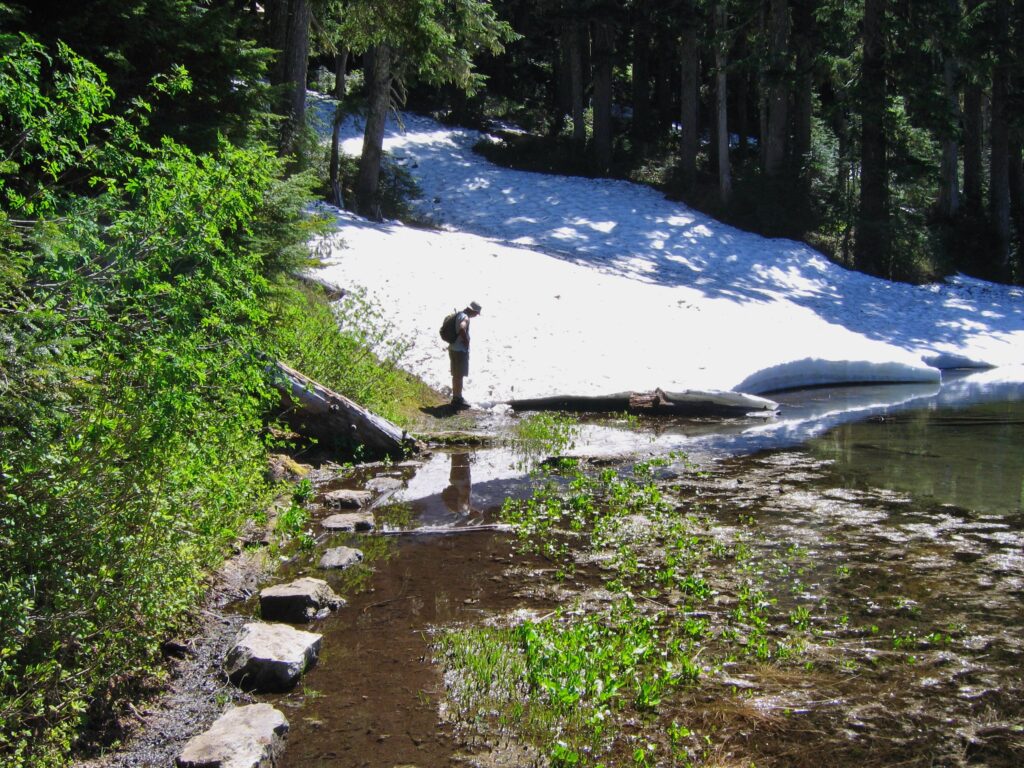
Banner photo of the receding Lake Christine snowpack by Tommy Hough.
 Get your edition of this framed Willamette River print, they won’t last long! Dan Coe prints are available by: