By WaterWatch of Oregon Staff
Oct. 30, 2025
Western water law is full of strange contradictions and paradoxical constructs. Water is extremely valuable, yet water itself is absolutely free. Water is valuable, yet we do not measure the majority of society’s use of water.
When a pioneering group of Rogue River anglers came together in the late 1970s to improve conditions for native salmon and steelhead using nothing but shovels, logs, and boulders, they likely had no idea they would spark a movement that would challenge, and ultimately change, antiquated Oregon water laws and river conservation throughout the west.
As this group of visionary anglers worked to restore river channels and access for the fish they loved, they came to recognize that without water flowing instream — that is, water flowing within the natural channel of a river or creek — all of their work would be for nothing. This was because across Oregon, at that time, more water often flowed in irrigation canals than in adjacent streams.
One angler, Tom Simmons, began to do a deep dive into Oregon’s water laws. Almost immediately, he met a long-time water activist named Audrey Jackson. The two soon joined forces and learned Oregon simply gave away new rights to use water — a public resource — for free, without considering the impacts on rivers or fish through processes dominated by agricultural, municipal, and industrial interests. They also learned that hundreds of waterways across Oregon were literally being sucked dry, even during the driest months of the year.
This situation was not unique to Oregon. Across the west, other rivers ran dry in states with similarly outdated water laws that failed to consider the needs of rivers, fish, wildlife, or the public interest. But with remarkable vision and tenacity, Tom and Audrey aligned themselves with a blue ribbon board of directors, and founded WaterWatch of Oregon in 1985 to address the dramatic imbalance between private and public uses of water. So began WaterWatch’s work to seek structural reform of Oregon water laws to protect and restore rivers and groundwater.
Forty years on, our organization has reformed dozens of outdated water laws and policies, protected and restored water in rivers and aquifers, reconnected habitat once blocked by seemingly immovable and obsolete dams, and driven climate resilience for Oregon’s freshwater environments, species, and people. The outcomes of this work have transformed water allocation and management in Oregon and the west to better care for the rivers, fish, and wildlife that grace our landscape.
An Early Landmark — Oregon’s Instream Water Rights Act
Throughout its history, WaterWatch has developed and applied new methods to protect and restore streamflows under the law. For better or worse, western water allocation and management is an intensely byzantine, legal affair. Unless there is a mechanism at law in Oregon and other western states to provide legal protection for water in streams or underground, that water will likely be extracted and used “out of stream” — and the stream will suffer accordingly.
Just two years after its formation, WaterWatch drafted and secured passage of Oregon’s 1987 Instream Water Rights Act. The first of its kind in the west, and the nation, this landmark law put instream flow protections on the same footing as traditional water rights by allowing three Oregon state agencies to apply for new instream rights: the Department of Fish and Wildlife, Department of Parks and Recreation, and the Department of Environmental Quality.
The Instream Water Rights Act also permits anyone to temporarily or permanently transfer their out-of-stream water right to an instream right, thereby creating opportunities for the most senior, or longest-held, water right on a waterway to be transferred to an instream right to provide unparalleled protection for fish and wildlife. Today, Oregon has approximately 2,000 state-applied instream water rights that provide varying degrees of protection for streamflows throughout the year on iconic rivers and tiny streams alike. This water is held in trust by the state for the public.
Since its passage, WaterWatch has worked tirelessly in the legislature and the courts to defend the Act and the protections it provides, and to support the establishment of new instream water rights, going all the way to the Oregon Supreme Court to ensure instream values under these rights are protected as designed.
Additional Tools for Establishing Instream Protections
Building on the Instream Water Rights Act, the Oregon Legislature passed a law in 1999 that requires the state to convert defunct hydroelectric rights into legally protected instream rights. Under this “hydro conversion” law, WaterWatch has protected streamflows on major rivers including the Rogue River (800 cubic feet per second, or cfs, upon removal of Savage Rapids Dam in 2009) and the Sandy River (600 cubic feet per second upon removal of Marmot Dam in 2007), as well as several lesser-known rivers and streams. WaterWatch also negotiated a promise from Portland General Electric to use the hydro conversion law for a future instream conversion of 640 cubic feet per second on the Clackamas River. In 2021, WaterWatch fought and won a case centered on a hydroelectric water right on Rock Creek in Baker County, in which the Oregon Supreme Court affirmed the use and meaning of the hydro conversion law to protect streamflows.
WaterWatch has also gone to the mat to enforce and enhance Oregon’s Scenic Waterway Act. Passed with overwhelming public support as a 1970 ballot initiative, the Act designates recreation, fish, and wildlife as the “highest and best uses” of water in designated scenic waterways. As part of the Act, the state must ensure that quantified streamflows to protect these uses are maintained. But after a period of over 30 years in which no new state scenic waterways were established, WaterWatch led a revival of the program that resulted in the designations of new scenic waterways on the Nehalem, Chetco, and Molalla rivers. WaterWatch has also worked to ensure the mandates of the State Scenic Waterway Act are upheld, including legal challenges brought to compel the state to develop the Deschutes Groundwater Mitigation Program, which requires mitigation of the impacts of groundwater development on state scenic waterways in the Deschutes Basin.
At the federal level, WaterWatch has utilized existing programs to protect and restore instream flows and craft new laws for further protection. In the Willamette River Basin, WaterWatch is leading conservation efforts to secure and protect water for fish in a multi-year federal project to reallocate 1.6 million acre feet of water storage space behind 13 federal dams in the basin. WaterWatch worked with Senator Jeff Merkley, the Warm Springs Tribes, and other stakeholders in the Crooked Basin to develop federal legislation that devotes half of the stored water behind Bowman Dam on the Crooked River to augment downstream streamflows for reestablished salmon and steelhead runs and resident trout. We’ve also utilized the now-threatened federal Endangered Species Act as a lever to restore and protect flows across the state, including the Deschutes, Walla Walla, and Klamath rivers.
WaterWatch has also been successful in the utilization of lesser-known tools to protect streamflows. In the North Fork Smith River Basin near the border with California, WaterWatch was instrumental in the effort to preserve the waters of the basin for instream use only by closing the basin to new out-of-stream appropriations. This effort also led to the designation of the Smith River as Oregon’s first-ever Outstanding Natural Resource Water under the federal Clean Water Act in 2017.
Forty Years of Leading a Paradigm Shift on River Barriers
Four decades ago, the idea of removing dams for the benefit of fish and wildlife conflicted with widely held values and beliefs. Today, the growing number of successful removals of obsolete dams on fish-bearing streams has become a celebrated symbol of progress, and represents a fundamental change in our relationship with rivers. Thanks to your patience, determination, and support over WaterWatch’s four decades of advocacy, our organization has played a significant role in this profound societal change, all while becoming one of the most successful dam removal organizations in the United States.
It is now well established dams negatively affect streamflows, can harm and kill migratory fish, and seriously degrade aquatic habitat and the natural productivity of our rivers. It has also been well established that all dams have an expiration date — a time when they become too costly economically and ecologically to justify their continued existence. That these facts are now widely understood, along with greater public awareness that dam removals provide real benefits to rivers, fish, and local communities, is a landmark achievement for river conservation.
Thanks to you, we’ve significantly reduced the harm caused by dams in Oregon. In the Rogue Basin, we started with the removal of three dams on the mainstem Rogue, converted a 517 million-gallon-per-day water right to an instream water right to protect mainstem Rogue River flows forever, and reestablished 157 miles as one of the longest reaches of free-flowing river in the west. Just in the last 10 years, WaterWatch has eliminated 12 additional dams and other barriers to improve access to hundreds of miles of habitat for native fish. These incredible results not only benefit the Rogue’s fish populations, but enhance fishing, boating, and other recreational opportunities while supporting the economy of southern and coastal Oregon.
Beyond the Rogue, WaterWatch played an important role in the removal of the Marmot Dam from the Sandy River, and negotiated the conversion of a 388 million-gallon-per-day hydropower water right to an instream water right. In its early years WaterWatch supported litigation in multiple forums on the Klamath River and advocated for its Wild and Scenic River designation, and worked for years to help clear the way for the eventual removal of the lower four Klamath River dam in 2023 and 2024. On the North Umpqua River, WaterWatch is leading a coalition of 20 local and statewide fishing, conservation, and whitewater groups to remove Winchester Dam. This disintegrating, 17-foot-high structure dating to 1890 is maintained solely to create a private waterski lake for surrounding landowners — but it continues to kill, injure, or delay salmon and steelhead attempting to access 160 miles of high-quality, cold water habitat upstream.
WaterWatch has also worked to improve conditions at existing dams by helping create statewide fish-friendly passage standards, and we’ve worked to stop harmful proposals for new dams or hydro facilities on the upper reaches of the Siletz River, Crooked River, in the Umpqua Basin, and the John Day Basin.
In the years ahead, WaterWatch will be working faster than ever to improve fish passage to high elevation cold water habitat and bolster native fish populations against the growing impacts of climate change. Your help makes these results possible. Thanks to you, removing dams has become a definition of progress. In the coming years, we’ll continue to work together to reduce the harm of dams, and see more of Oregon’s spectacular rivers run free.
Forty Years of Protecting Oregon’s Groundwater — and the Rivers, Springs, Wetlands, and Lakes Groundwater Supports
Hidden from view beneath the earth’s surface in the spaces between rocks and layers of soil, groundwater is the source of cold, clean water that ultimately feeds rivers, streams, springs, wetlands, and related ecosystems to ensure their stability and survival.
A critical bulwark against the impacts of a warming climate, particularly as the dry season extends as climate change intensifies, Oregon’s system for issuing new groundwater pumping rights has, over the years, resulted in unsustainable groundwater use, and harmed groundwater-dependent ecosystems — along with the people who rely upon wells for drinking water. Since WaterWatch’s founding in 1985, our organization has worked to shape groundwater policy and management in known areas of overpumping, such as the Umatilla, Harney, Deschutes, and Klamath basins. Over time, this work has reformed state groundwater policy to protect streamflows, wetlands, and other groundwater-dependent ecosystems.
Like much of our work, groundwater reform requires a commitment to playing the long game. A good example of this is WaterWatch’s decade of work in the Harney Basin. In 2014, WaterWatch discovered the state had been issuing new groundwater permits in the basin based on an approach known as “default to yes,” in which the Oregon Water Resources Department would default to the issuance of a groundwater pumping permit despite the lack of adequate information as to whether the water resource itself was over-appropriated.
Given the significant groundwater declines in the basin, WaterWatch filed legal challenges and educated press outlets on the problems of groundwater over-appropriation. This led to the Draining Oregon series that ran in The Oregonian beginning in 2016, and later coverage from Oregon Public Broadcasting in the form of the Race to the Bottom series beginning in 2022. Both highlighted the crisis the state was creating through unsustainable and spendthrift policies around groundwater, and helped move the needle toward reform.
WaterWatch’s advocacy in daylighting this decades-long problem helped create the appetite for much-needed modernization of groundwater allocation rules, which culminated in the adoption of new statewide rules in 2024. Today, Oregon no longer rubber stamps groundwater permit applications when no one knows if the request is within the capacity of the aquifer. Under updated groundwater allocation rules, Oregon now has the metrics to determine whether an aquifer level is falling unacceptably, and connectivity to surface waters is better addressed.
With this sea change in reforming Oregon’s groundwater allocation rules complete, WaterWatch is now working to solve issues related to existing overpumping — an enormous task that your support as a WaterWatch of Oregon member helps facilitate.
Forty Years of Identifying Water Management Problems and Fixing Broken Approaches
One of the stalwarts of WaterWatch’s advocacy over the past 40 years has been the watchdogging of all state agency water allocation and reallocation decisions. This “in the trenches” work to modernize water management has given WaterWatch a unique inside view into the workings of water management in Oregon, and helped daylight gaps in need of reform.
Preventing Issuance of Surface Water Permits Where There is No Water Available
In the early 1990s, at WaterWatch’s urging, the state adopted a policy that prohibits the overallocation of Oregon’s rivers and streams. Ensuing rules required water be available for a proposed surface water use before a new water right is issued. This marked a monumental shift in how water is allocated and managed in the state. When WaterWatch was founded in 1985, the state had not, to our knowledge, ever denied an application for water on the basis that no water was available. As a result of this sea change, streams are now protected against further damage in almost every basin in Oregon.
Measurement and Reporting of Water Use
Recognizing that what gets measured gets managed, WaterWatch spent our early years opposing all new water rights on the grounds that the state should require measurement and reporting of water use. In 1993 the state agreed, and began to require measurement and reporting of all new water rights. WaterWatch then urged the state to attach the same measurement requirement to existing rights. WaterWatch’s advocacy also resulted in the Oregon Water Resources Commission’s adoption of the 2000 Strategic Water Measurement Strategy, which targeted significant diversions in prioritized basins. And in 2023, WaterWatch worked with legislators to pass a bill that granted broad reporting authority to the state. While we may have a long way to go on this front to get to full measurement and reporting, incremental successes driven by WaterWatch have successfully paved the way for further work.
Preventing Speculation in Oregon’s Waters
As competition for water escalated across the state, WaterWatch’s watchdogging work uncovered a growing trend of cities and other water users to hoard water for speculative purposes instead of actual needs. Several key cases undertaken by WaterWatch largely put an end to this practice, including a case that challenged an application by the Coos Bay-North Bend Water Board in 1990 to secure a new water right on Tenmile Creek, located along the coast in Coos County between Tenmile Lake and the ocean. In that case the Coos Bay-North Bend Water Board, a municipal water developer, hadn’t planned to put the water to immediate use — they just wanted sit on it.
Tenmile Creek and its namesake lake provide important habitat for coastal coho salmon, steelhead, and other fish and wildlife, so WaterWatch litigated the matter and won in the Oregon Court of Appeals in 2004, which ruled that a municipal water developer — and therefore, any water user — cannot speculate in Oregon’s waters by securing water use permits without any intention to put the water to use within the time provided by statute — generally five years. In addition to securing important protections for Tenmile Creek and its salmon, the case set another important precedent.
Years later, on the McKenzie River, WaterWatch litigated against an attempt by a private water company to acquire a permit to divert about 200 million gallons a day from the McKenzie River at the expense of fish and streamflows. The speculators claimed they would become the water provider for a number of southern Willamette Valley cities at a point in the future that exceeded the initial deadline allowed by the permitted development, despite the fact they didn’t have any contracts with cities or infrastructure. WaterWatch convinced the Court of Appeals to reaffirm the precedent it set in the Coos Bay case against speculation, and successfully protected streamflows and fish in the McKenzie for future generations.
Reforming Permit Development Extensions
WaterWatch has also done extensive work on issues related to extensions of time to develop water rights in which the permit holder failed to meet the permit’s deadline for putting water to use. This complex work has resulted in better consideration of fish and streamflow concerns.
An early example of this work involved Boeing’s lease of agricultural lands, and de facto wilderness, along the Columbia River near Boardman in Morrow County. It was here WaterWatch challenged a proposed extension of time to develop a large amount of water from the Columbia River by Boeing’s lessee, Threemile Canyon Farms — now one of the largest dairy “farms” in the world. WaterWatch secured important reductions in the amount of water to be used, a transfer of 22,000 acres of wildlands to protected status, and $1.5 million for the Oregon Water Trust (now part of The Freshwater Trust) to acquire water in the Columbia Basin for streamflow protection and restoration.
In a much-needed reform, by the time WaterWatch of Oregon v. Boeing Agri-Industrial Co. was filed in the Oregon Court of Appeals in 1998, the matter had resulted in a revamping of Oregon’s extension laws and rules to better consider the needs of fish and wildlife. WaterWatch’s Tenmile litigation and related legislation similarly sparked modification Oregon’s extension laws and created a new requirement that certain undeveloped municipal water rights be conditioned by the state to “maintain the persistence” of federal Endangered Species Act or state ESA-listed species, marking a key step forward for imperiled species and biodiversity.
As author Marc Reisner famously detailed in his classic 1986 book Cadillac Desert, western water law is full of strange contradictions and paradoxical constructs. Water is extremely valuable, yet water itself is absolutely free. Water is valuable, yet we do not measure the majority of society’s use of water.
WaterWatch was established to address some of these impediments to rational and sustainable water management, and reform the dramatic imbalance between private, extractive uses of water and public, non-consumptive uses of water. Since 1985, our programs have addressed these ecologically damaging and unjust structures by reforming outdated water laws and policies, protecting and restoring streamflows, removing obsolete dams, and delivering climate resilience for Oregon’s freshwater environments, species, and people.
Over the last four decades our work has driven policy and systems change towards outcomes that begin to right historic wrongs in water allocation and management in Oregon, and by extension, the West. With your support, and the rule of law behind us, that story continues.
For more, visit the WaterWatch at 40 timeline, including key WaterWatch of Oregon milestones since our founding in 1985.
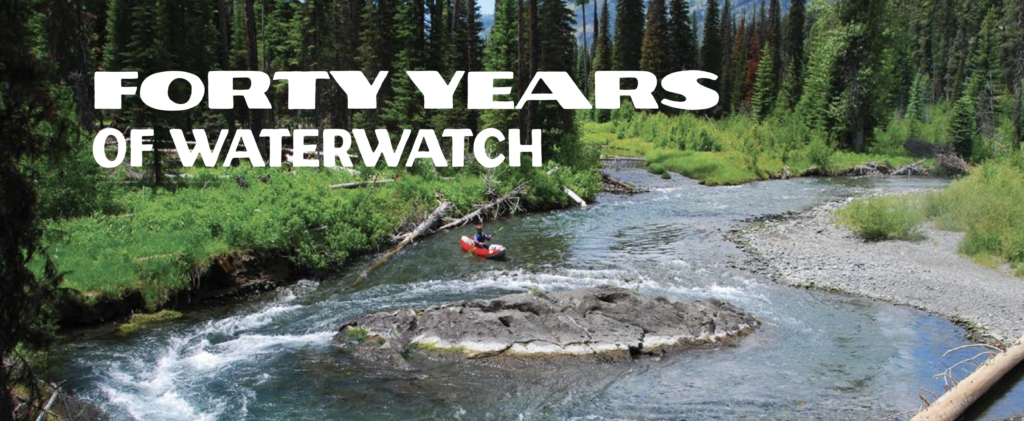
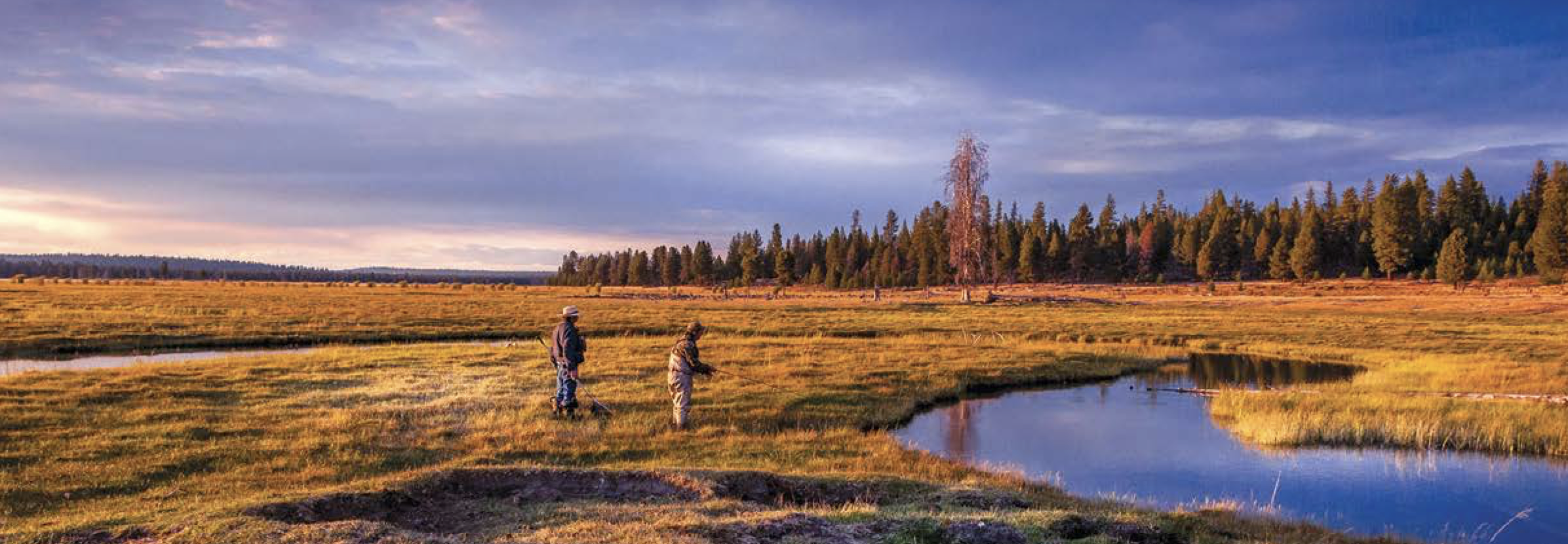
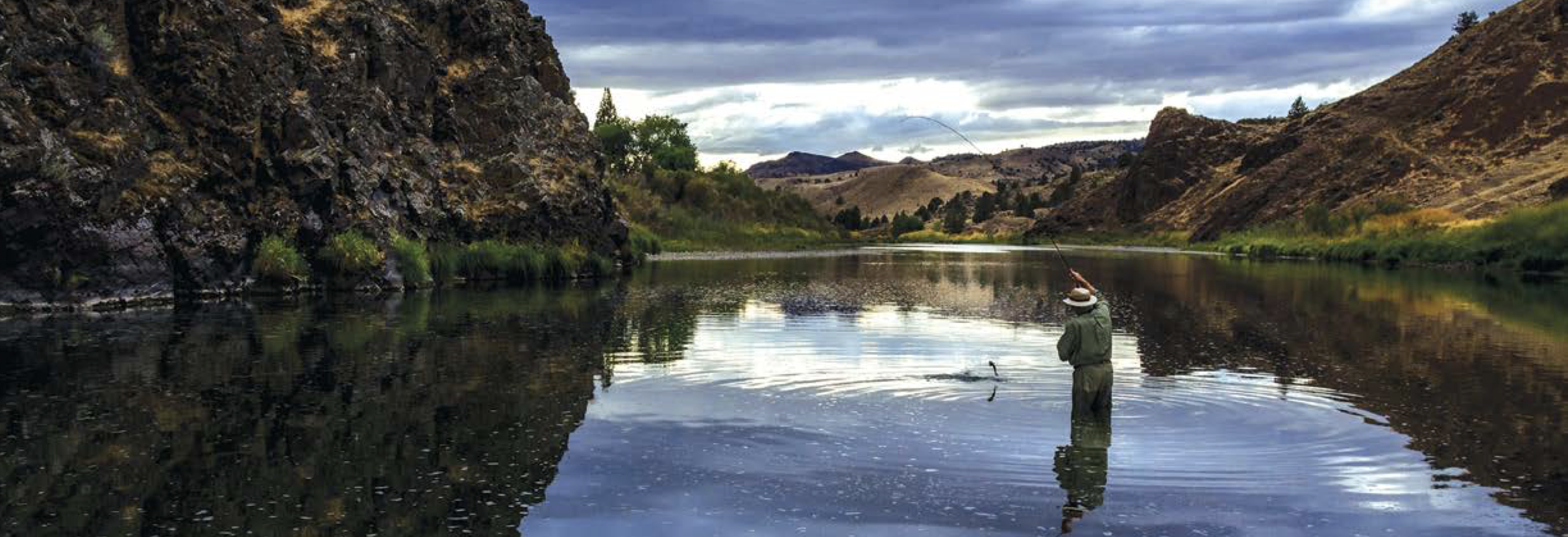
Photo credits: kayaker on the Imnaha River courtesy of Leon Werdinger, Yamsi Ranch on the Williamson River courtesy of Rick Hafele, angler on the John Day River courtesy of Rick Hafele, aerial view of the McKenzie River courtesy of Nicholas J. Klein.