By | March 23, 2026 | Uplift Local The Gorge
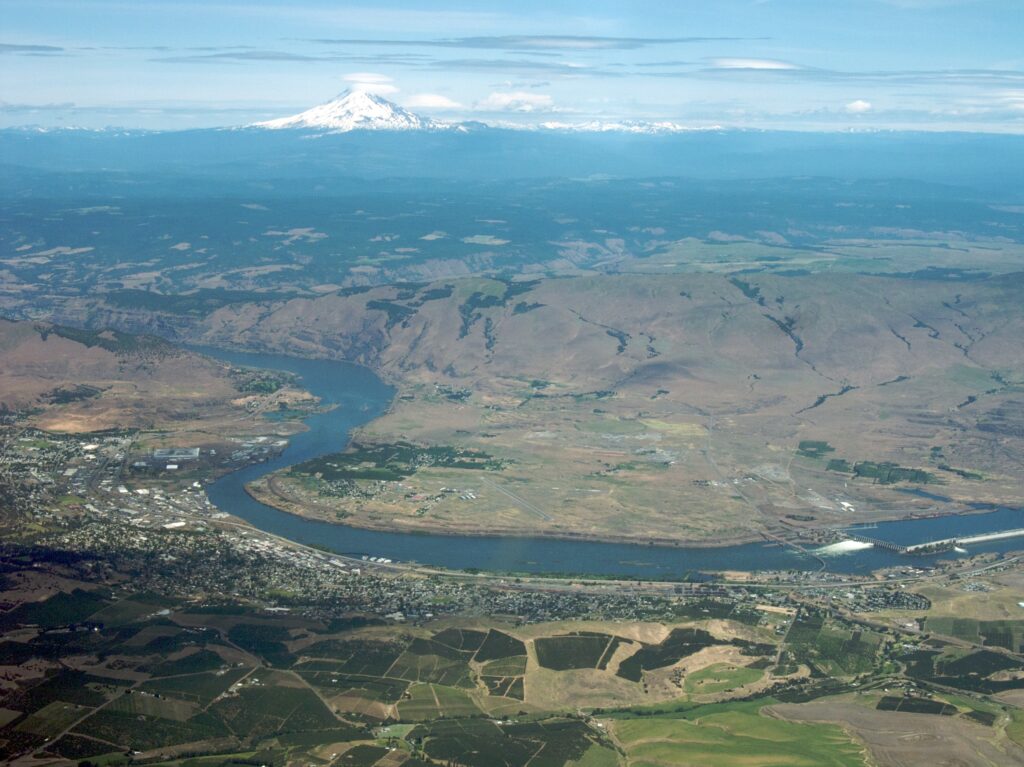
For decades, The Dalles has been trying to get ownership of 150 acres of Mt. Hood National Forest land around the Crow Creek reservoir that’s a major source of the city’s water supply.
For months, the city has been fighting accusations the effort to obtain the land, which officials say would make it easier to enlarge the reservoir in the future, is aimed at serving Google, which operates five data centers in The Dalles and is planning another, all of which use the city water supply.
It’s been a very public dispute, with detailed disagreements over the accuracy and interpretation of information. And, officials acknowledge, the dispute is heightened by questions of trust — specifically whether, five years after taking legal action to conceal how much water Google was using, the city can now be believed.
“Was [concealing water use data] the right decision? I don’t know. In retrospect I guess it’s easy to say probably not,” The Dalles Mayor Richard Mays told the Port of the Dalles board at its March 11th meeting. “Looking back now, I think the position we took is coming back to haunt us today.”
The Background in Brief
As Mays recounted to the port board, in 2021 The Dalles and Google negotiated an agreement for the company to build up to two new data centers. Under the deal, Google paid $28.5 million to upgrade the city’s water supply and transferred some of the company’s water rights to The Dalles. The agreement included a certain number of gallons of water for Google’s use, but that number was removed from the public version because it was considered a trade secret.
In September 2021, about six weeks before the agreement was finalized, The Oregonian newspaper requested The Dalles to clarify how much water Google used the year before. The Wasco County district attorney agreed it was a public record. But in October 2021, the city filed a lawsuit to stop the release, before eventually settling a year later.
The Dalles now routinely releases Google’s water use records, but memories of its initial response haven’t faded.
“The minute somebody starts to hide something, and then it comes out later, it feels like a lie,” Carrie Thomas told Uplift Local. “Then you’re always on alert.” Thomas is a board member of Thrive Hood River, part of a coalition of organizations opposing the proposed Mt. Hood National Forest land transfer.
Fast forward to this year. In January, an Oregon Public Broadcasting report connected The Dalles’ efforts to secure land around the reservoir to the water needs of Google’s local data centers. In response, The Dalles’ longtime former public works director wrote a detailed critique challenging both the report’s premise and certain facts, which OPB then rebutted. The city also posted a webpage explaining why it wants the land transfer. In February, a coalition of 14 environmental organizations wrote a letter to lawmakers seeking to kill the legislation now in Congress that would make the transfer happen.
Some key disagreements include:
- Whether adding 150 acres of National Forest to the land already owned by the city in the Crow Creek watershed would affect on-the-ground management, including plans to expand the reservoir that have been on the horizon for nearly 30 years.
- Whether giving that U.S. Forest Service land to The Dalles would weaken oversight of a future reservoir expansion, or whether other agencies’ regulations would provide enough environmental protections.
- Whether the planned expansion of the reservoir is driven by the general need to store more water, as rain replaces snow and snowpacks melt early, or by the demands of data centers.
But a lack of trust set the tone. In its letter to lawmakers, the coalition of environmental groups raised a number of specific concerns. It also overtly called into question the city’s credibility.
“The duplicitous effort to promote this legislation, including Dalles-area politicians’ efforts to hide Google’s role in it, is exactly the kind of deceit that has made so many Americans cynical about our government,” the letter said.
The Bigger Picture
National surveys show questions about the benefits versus costs of data centers, amid the growth of artificial intelligence, are unsettled for many Americans, with notable concerns about negative environmental impacts and increased energy costs. Research also shows trust in government has been trending downward for decades, although local government has often fared better than federal institutions.
Dave Anderson, who retired last year after nearly two decades as The Dalles public works director, says that when the city and Google were negotiating their 2021 agreement he thought the community generally got on board.
“We tried to be very open and transparent, with everything except that water quantity number,” he said, recalling several public meetings and hearings. “It kind of felt to me [that] people in the community may have still had some questions, but they understood a lot more about what was going on.”
He says bringing up the city’s past secrecy about Google’s water now creates heightened public concern and makes room for what he described as “quite a bit of false narrative and incorrect innuendo,” such as what he detailed in his letter to OPB.
But Thomas, the Thrive Hood River board member, said she believes the proposed land transfer raises vital environmental issues. She also said she would like to learn more about some points Anderson makes, but emphasized the need for transparency.
“Thrive is a watchdog organization, and part of that is always pushing back and trying to say, ‘Hey, what’s going on?’ And bring it to light,” she said. “I think there’s more to be watched.”
Mayor Mays said he wished the groups had talked with the city before sending their letter to lawmakers. But John DeVoe, who signed the coalition letter on behalf of the statewide organization WaterWatch of Oregon, again cited the city’s 2021 lawsuit to keep Google’s water use a secret. “Complaints about lack of communication and transparency don’t make a whole lot of sense coming from the city,” he told Uplift Local in an email.
What Happens Next
A meeting between some members of the environmental coalition and The Dalles officials is in the works, both groups say. Mays says he hopes sharing information will help rebuild trust. After hearing Mays and Anderson at the Port of The Dalles March 11th board meeting, executive director Andrea Klaas said a few things stood out to her.
“What stood out is the City has had a long-range plan for the Crow Creek Reservoir for many years,” she wrote in response to an email. “The watershed supplies 70 to 80 percent of The Dalles’ municipal water, water rights are not changing, and the requested land transfer represents less than one percent of the existing watershed.”
At that meeting, Mays also said he wishes Google would be more forthcoming about the positive impact it’s having on the local economy. He told the group that in addition to the 200 or so people that Google has on staff in the Gorge, “they also have several hundred others that are employed by firms that Google employs, independent contractors.”
Talking with Uplift Local later, Mays said he thinks it would be in Google’s “best interest” to publicize those numbers.
Meanwhile, Senator Ron Wyden has declined to share any position on the land transfer bill, which is now in the Senate’s Energy and Natural Resources Committee, where he is a senior member.
His approach to the legislation “will depend on the views he has heard and will continue to hear,” the senator’s Oregon spokesperson, Hank Stern, said in an email.
Stern pointed to two town hall meetings Senator Wyden will hold in The Dalles and Hood River next Tuesday, March 31st, saying it’s “a safe guess” that this issue will be raised at the gatherings.
Read Uplift Local’s full notes from the Port of The Dalles March 11th board meeting, compiled by documenter Natasha White, with support from documenter Jinlu Yuan.
This article originally appeared in the March 23, 2026, edition of Uplift Local The Gorge. Banner photo courtesy of Samuel Beebe / Ecotrust.