
By Sam Hill | Jan. 25, 2026 | SFGATE
Concerns about Big Tech have emerged in a proposal to transfer land from the Mount Hood National Forest.
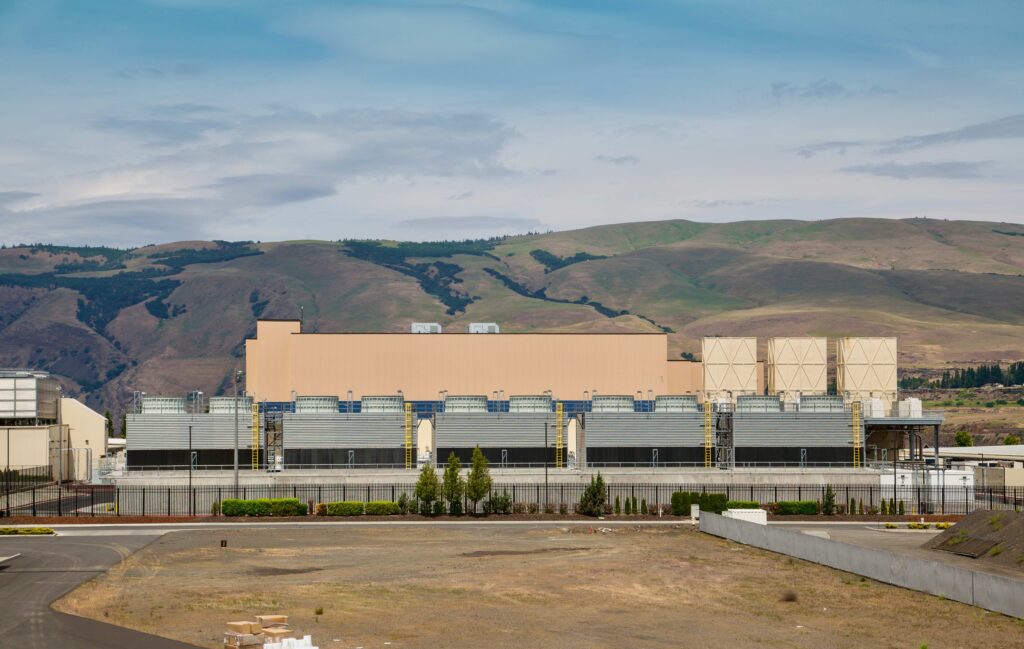
Along the scenic shores of one of the Columbia River, a water dispute is growing between environmentalists and a city where Google devours nearly a third of its water resources.
A proposal to transfer ownership of a slice of Mount Hood National Forest to the city of The Dalles is raising alarm among public lands advocates, who see it as a test case for how Oregon manages water resources amid a boom in data centers and increased drought concerns in the region.
The legislation, introduced earlier this year by Rep. Cliff Bentz, would allow the Dalles to take control of roughly 150 acres of federal forest land to secure long-term access to water sourced from Mount Hood’s watershed. The city already relies on water that originates from the mountain and has expanded its rights in the past through permitting and infrastructure agreements, but supporters of the bill say the transfer would eliminate those workarounds by placing the land — and its water supply — directly under city control.
City officials have said the proposal is intended to meet future municipal needs as the community grows. They have repeatedly denied that it is tied to Google, which operates a large data center campus in the city.
“When it’s owned by someone else other than us, we can’t control it,” Richard Mays, the mayor of the Dalles, told Oregon Public Broadcasting in a recent investigation into the legislation. “We have to go through all sorts of red tape and special use permits with the Forest Service in order to be able to expand that reservoir.”
But watchdog groups say the bill raises fundamental questions about transparency, accountability and the future of public lands — especially given Google’s outsized role in the city’s water system.
“It doesn’t really matter if it’s one acre or, in this case, 150 acres — we want to ensure that these lands are kept and managed for the good of the environment,” Jordan Latter, a program manager with Bark, a nonprofit that supports Mount Hood National Forest, told SFGATE.
Google in the Gorge
Google has maintained a presence in the Columbia River Gorge National Scenic Area since 2006, when it announced plans for one of its first large-scale data centers near the Dalles. Over the years, the company has invested millions in local infrastructure, including water system upgrades, and has become the city’s single largest water customer — consuming roughly a third of the Dalles’ supply, according to previous reports.
City officials and Google have both said the Mount Hood proposal is unrelated to the company’s operations, despite the unavoidable link between the area’s water needs and Google’s growth. While the city cites population growth as the reason for increased water needs, the Dalles’ population hasn’t grown much this past decade — only about 1,700 people have moved to the area over the last 15 years, according to data from Portland State University. Its population now is around 16,000.
Mays’ office did not respond to questions from SFGATE about the legislation, and a Google spokesperson declined to comment directly.
The city has a history of limited disclosure around industrial water use. The Dalles sued The Oregonian to prevent the release of information about Google’s water usage in the area. In 2023, the city settled after a 13-month legal battle with the publication. At the time, city officials said the tech giant’s local annual water usage from 2012 to 2021 was considered a “trade secret” and could be kept private. The city ultimately decided to share those records and agreed to disclose similar data in the future.
“They went to court to try and hide information that’s regularly available to the public,” John DeVoe, a senior advisor at the nonprofit WaterWatch of Oregon, told SFGATE. “And now the city and Google want to tell you that [Google] is a sensitive, sustainable, transparent company.”
Streams in the Crosshairs
Transferring a portion of Mount Hood National Forest to the city of the Dalles would not just change who manages the land — it would strip away federal protections overseen by the U.S. Forest Service. Under federal control, the Forest Service regulates water use, monitors wildlife and enforces environmental standards designed to safeguard ecosystems and maintain sustainable resources.
Environmental groups warn that moving the land into municipal control would effectively eliminate those checks.
“This is a direct contradiction to what is in the public interest, even if it serves some local interest,” Will Fett, the executive director of Bark, told SFGATE. “We can do a lot of guesswork as to the motivations behind [the legislation], but the reality is we need to protect our water resources. We need to protect the wildlife, and we need to protect the land for the betterment of the citizens of this country.”
Aquatic wildlife, which suffered as Oregon industrialized over the 20th century, is also top of mind when considering how to manage the Columbia River. Several fish species in the region are already at risk, including culturally significant salmon populations. Activists worry that limiting federal oversight prioritizes profit over accountability, potentially lowering stream flows and warming water temperatures — conditions that are particularly harmful to cold-water species.
“The companies that push for more water, more energy production, more land to support their interests are always going to find the cheapest possible source, and that’s going to be public land in a lot of cases,” Steve Pedery, the conservation director for the environmental group Oregon Wild, told SFGATE. “They don’t have to care about things like spotted owl populations or hiking trails or future generations. All they care about is the next couple of quarters and the bottom line. If putting a power line through an old-growth forest instead of beside a highway could be cheaper, they’ll try it.”
Environmental advocates fear that granting the Dalles unrestricted rights to these lands and waters would set a precedent for future transfers, potentially prioritizing municipal or corporate interests over ecological sustainability. Elsewhere in the country, there’s been an active push to transfer public lands to private owners. Utah Sen. Mike Lee, for instance, chairs the Energy and Natural Resources Committee and has proposed the sale of public lands, only to be met by public outcry multiple times.
“The usual watchdogs who are there to protect the public interest are either disempowered or completely gutted in terms of staff,” Pedery said. “Issues like this are really going to come down to citizens and advocacy groups having to do the work ourselves. If people hadn’t pulled the fire alarm on and outed [the situation in The Dalles] publicly, it was very likely that the legislation would have gone through without any local debate.”
Data Center Oversight
The bill to benefit The Dalles cleared the House of Representatives last year and currently sits in the Senate’s natural resources committee, led by Lee. Oregon Sen. Ron Wyden, a Democrat, sits on the committee but has remained noncommittal in comments to OPB about the bill.
At the same time, Oregon Gov. Tina Kotek has established a seven-member Data Center Advisory Committee to study the broader implications of expanding industrial water and power use in the state. Tech giants like Google, Amazon, and Meta operate many of Oregon’s 121 data centers, mostly right outside Portland and in smaller eastern Oregon towns.
The committee is tasked with developing policy recommendations that balance economic growth with the protection of natural resources and affordable energy. It is expected to issue a report with its statewide recommendations by October.
Environmental groups are paying close attention and have pointed out the makeup of the committee.
“The governor just assembled this data center task force that doesn’t have any public lands or land-use representation on it,” Pedery said. “I think that there’s a little bit of the frustrating dynamic right now, that I think there isn’t a clear political home for people who are concerned about this stuff.”
This article was originally posted by SFGATE on Jan. 25, 2026. Google data center banner photo courtesy of Tony Webster / Wikipeida Commons.