This article appears in the summer 2026 issue of WaterWatch of Oregon’s Instream newsletter.
The effects of climate change on Oregon’s river ecosystems have been stark. Low snowpack, warming temperatures, and shifting hydrology are exacerbating long-standing challenges facing Oregon’s over-tapped rivers. Climate change is also increasing incidents of drought, with 2026 being no exception.
As Oregon heads into what is expected to be an extraordinary drought, WaterWatch is calling on Governor Kotek to use her office’s existing authorities to help alleviate the impacts of this year’s drought on Oregon’s rivers, streams, and wetlands and the fish and wildlife that call them home.
Low streamflows and warm conditions make it difficult, if not impossible, for cold water species like trout, salmon, and steelhead to survive — or thrive. Without water in our rivers, streams, and wetlands, food sources for birds, mammals, amphibians, reptiles, and insects also become severely compromised. In the face of projected drought conditions across Oregon, protection of Oregon’s aquatic habitats is not only essential to our state’s fish and wildlife, but the people, cultures and river-related economies that depend upon healthy river ecosystems.
While there is a dire need for Oregon to expand its statutory drought toolbox to better protect ecosystems into the future, existing law does provide the governor with pathways for immediate action that could help protect Oregon’s aquatic ecosystems in the face of this year’s drought. To help stave off an ecological disaster this summer and fall, we have asked Governor Kotek to utilize her office’s existing authorities to better protect our rivers, with these recommendations:
- Require cities, irrigation districts, and other political subdivisions to conserve water and/or curtail use. State law grants the governor authority to require cities, irrigation districts, and other political subdivisions of the state to develop and implement conservation plans, curtailment plans, or both in areas where the governor has declared a severe, ongoing drought exists, or is likely to exist. Given the number of counties already under emergency drought declarations, implementing this tool could significantly reduce use of our state’s already-stretched water resources. As we have seen in states like California, mandating conservation has proven to be an invaluable tool for conserving water for people and ecosystems alike.
- Support the Oregon Water Resources Department’s use of all available water management tools to help minimize detrimental impacts on streams, fish, and wildlife. While the historical over-appropriation of Oregon’s water resources puts rivers and aquatic species at risk every year, the problems they face are greatly amplified in times of drought. To that end, we urge Governor Kotek to support OWRD’s use of existing management and/or legal tools to help minimize drought impacts on our state’s rivers, including enforcement against waste, requiring additional measurement and reporting of water use, aggressive regulation in favor of instream rights, ensuring municipal fish persistence conditions are adhered to, and imposing civil penalties for the illegal use of water.
- Direct expeditious processing of instream water right applications. Instream water rights are the most important tools the state has to protect the inherent right of water to flow instream in its natural streambed. In addition to the value of instream water rights in protecting water in our rivers and streams against future withdrawals, instream water rights are also the only existing defense against harmful transfers, including emergency drought transfers. As such, it is imperative the state expeditiously move instream water right applications through the approval process.
- Urge coordination among state natural resource agencies to efficiently utilize all available tools to protect Oregon’s aquatic ecosystems. While coordination amongst agencies is always important, it is especially crucial in times of drought when additional stressors are compromising the health of aquatic ecosystems and the species that rely on them. To that end, we have asked Governor Kotek to direct close agency coordination to address the effects of drought on Oregon’s rivers, especially as it relates to ensuring that emergency drought water permits do not compromise streamflows, fish and wildlife habitat, scenic waterways, or water quality.
Aquatic ecosystems and the fish, wildlife, people, economies, and cultures they support are invaluable to Oregonians. While long-term work is needed to protect Oregon’s water resources into the future, in the face of immediate threats posed by the 2026 drought, Governor Kotek and the agencies she oversees should employ all available tools to help mitigate the impacts of drought on our state’s rivers and the iconic fish and wildlife they support. If you agree, please contact Governor Kotek to urge her to protect Oregon’s rivers this summer and fall.
Call on State Legislators to Build Drought Resilience Into the Future
As legislators gear up for the 2027 legislative session, now is also the time to urge your state senator and representative to think about proactive policy and budget measures to bolster climate resilience for Oregon’s rivers. Some key messages legislators need to hear include:
- Stop things from getting worse — require an environmental review of water right changes. Oregon’s outdated water laws have long favored extraction over protection. Now is the time to urge your legislators to close a dangerous loophole that allows the Oregon Water Resources Department to approve water right changes, called “transfers,” to existing water rights — i.e., modifying where and how water is used, and where it is extracted — with zero consideration of environmental harm. With the state’s water right transfer processes, the impacts to streamflows are left out of consideration. It’s time to close this loophole and keep our rivers from further harm by requiring an environmental review on water right transfers.
- Add new protections — support minimum flows for fish. Under Oregon’s outdated water code it is perfectly legal to drain a river dry, regardless of the impact on fish, wildlife, recreation, and the economies that rely on water flowing in our rivers and streams. The 2026 drought offers a salient example of the need to strengthen Oregon’s protections for rivers and fish. Please urge your legislator to look to California as an example, where minimum survival flows on select streams must be met before extractive uses can pull water from a river.
- Fund instream projects. While “drought relief” packages are common in Oregon and at the federal level, measures aimed at ecosystem relief are less common. As legislators begin to consider packages for agriculture and other extractive industries, urge them to fund ecosystem work that will help Oregon become more climate resilient. Any “drought relief” package should include funding for fish passage and/or dam removal, instream water right acquisitions, stream and temperature gauges, and other instream restoration projects so that fish and wildlife have a fighting chance.
- Support water data. Good data to back good decisions is a cornerstone of responsible water management. In the face of a changing climate, it is more important than ever that the state invest in data, including groundwater investigations, flow studies, and gauges. Please urge legislators to keep their eye on the ball and ensure there are not only zero cuts to existing data programs like stream gauges, but that the state amplifies its commitment to funding data and IT needs to support the collection, analysis, and dissemination of the information.
While only a snapshot of what is needed to build climate resilience for Oregon’s waters, carrying these messages to your legislators before they are mired in the day-to-day work of next year’s session is an important first step. Please urge your state representative and senator to keep their attention on efforts to mitigate the devastating impacts of drought on Oregon’s rivers, and the many economies they support.
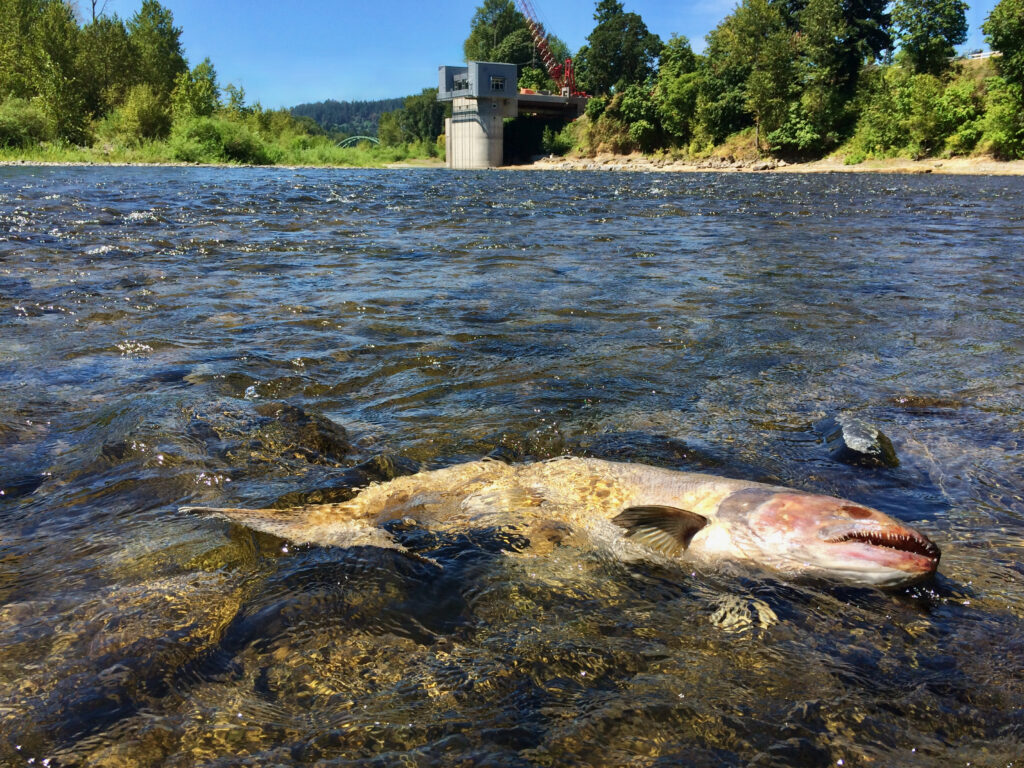
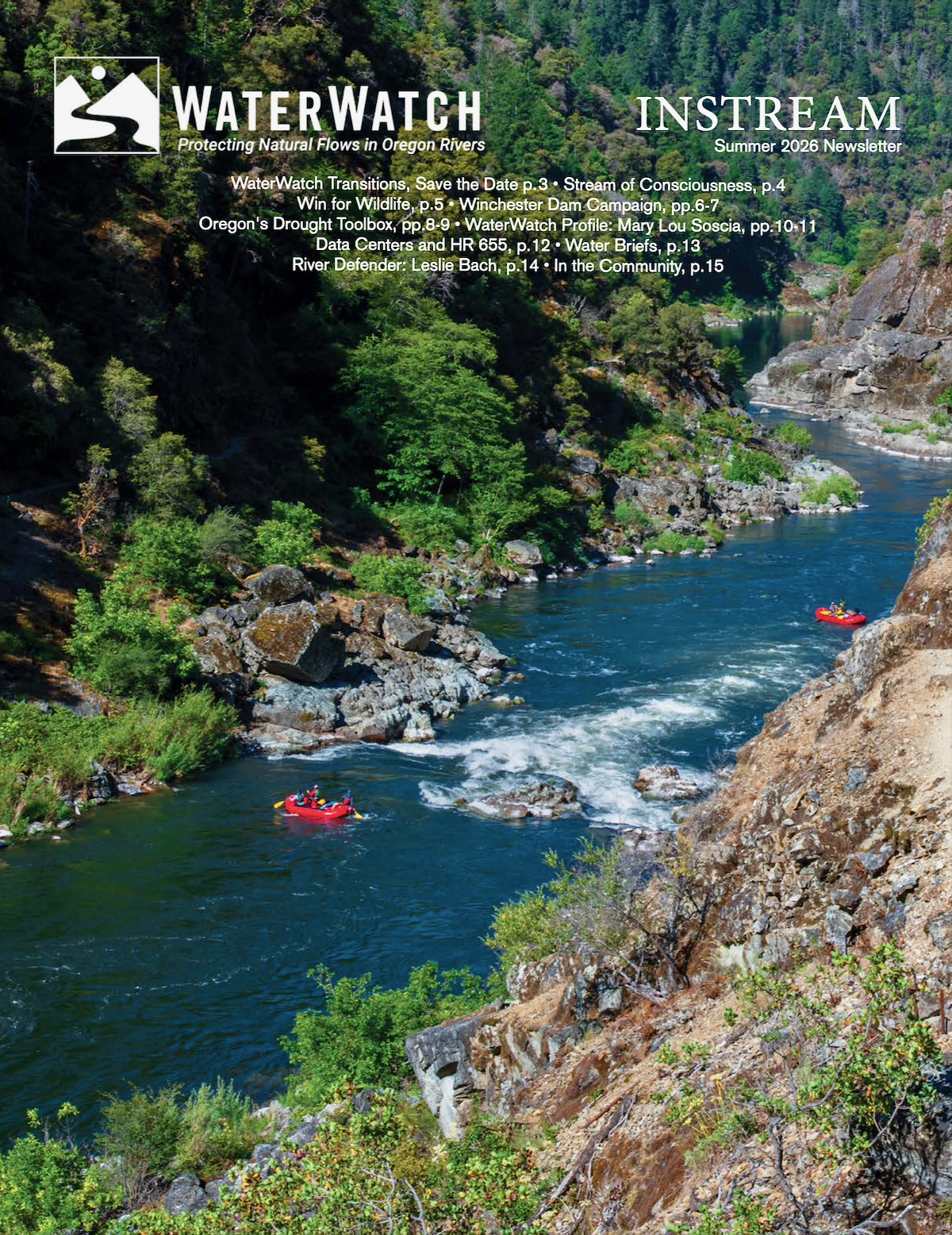
Banner photo of the Clackamas River in August 2015 by Lisa Brown, Instream Rogue River cover photo courtesy of Kyle Sullivan / Bureau of Land Management. Cover designed by Monet Hampson.
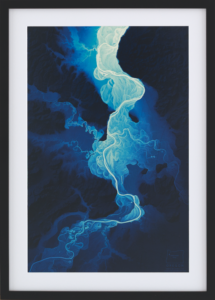 Get your edition of this framed Willamette River print, they won’t last long! Dan Coe prints are available by: