
By | April 27, 2026 | The Daily Emerald
HR 655 threatens 150 acres of public land in the Mt. Hood National Forest. Senator Ron Wyden has a chance to help protect it.
Growing up in the Portland metro area, one of my favorite childhood memories was visiting Mt. Hood and the surrounding forests — a sentiment many Oregonians share. Even now, I can recall all of my favorite parts of visiting the Mt. Hood National Forest: the crisp air in the understory, the large tree trunks surrounding me, the numerous creeks trickling through the forest floor, the unmistakable presence of the mountain in front of me and the wildlife all around.
This beloved forest is now jeopardized. Last December, Representative Cliff Bentz (R-OR 2) proposed a legislative initiative to transfer approximately 150 acres of federal public land from the Mt. Hood National Forest to the City of The Dalles.
In an interview with Bark for Mount Hood, executive director Will Fett and director of community engagement Jade Hagan expanded on the current organizing efforts to protect the forest. Bark is committed to protecting and defending the Mt. Hood National Forest and has historically rallied against old-growth logging projects and in support of restoration projects.
“We have an active poll going on right now with over 100 responses, 97 percent of which oppose this bill,” Hagan said.
The Dalles is the home to five Google data centers, with a sixth one under construction. In 2025 alone, the data centers used 550 million gallons of water, which is 40 percent of the city’s total water consumption, a 26 percent increase from 2024.
About 80 percent of The Dalles’ water supply comes from the Dog River, a tributary of the Hood River. Recently, The Dalles expanded pipeline capacity from the Hood River watershed to the South Fork of Mill Creek, which feeds the reservoir associated with a proposed land giveaway. Despite minimal population growth, the bill aims to transfer about 150 acres to allow The Dalles to triple the reservoir’s capacity to collect water from the Dog River.
The bill is currently before the Senate Energy and Natural Resources Committee, and 14 organizations have drafted a letter urging Senator Ron Wyden, who serves on the committee, to oppose it.
“There’s zero compensation specified in the legislation for the federal government, for the taxpayers, since they are literally planning to hand over public land to the city,” Fett said. “We are very concerned about the downstream ecological impacts, and we are concerned about the motives behind this — which we perceive to be Google and the growing water demand.”
The Dalles has a history of secrecy, having been involved in a lawsuit against The Oregonian over the release of public records related to Google’s water use. It was later revealed that Google paid the attorney fees for The Dalles to block a public records request and delay the process.
“As reporting continues to evolve on HR 655, it appears the city of The Dalles’ demand for water is enough to dry up the Dog River, especially during the warmest months of the year when flows are reduced,” said Tommy Hough, communications manager at WaterWatch of Oregon. “Other data centers that are being built rapidly on the west coast are tapping into these local water supplies. They rack up huge electrical bills, which ratepayers wind up paying.”
WaterWatch of Oregon is a conservation nonprofit that focuses on maintaining natural streamflows, and has raised institutional concerns about five salmon species protected under the federal Endangered Species Act list that would be negatively impacted by the potential redirection.
Sen. Wyden currently has the power to listen to the various community leaders, conservation nonprofits, and forest enthusiasts to protect the forest and its natural resources. It’s an important step to ensure public lands remain public and keep our environment safe.
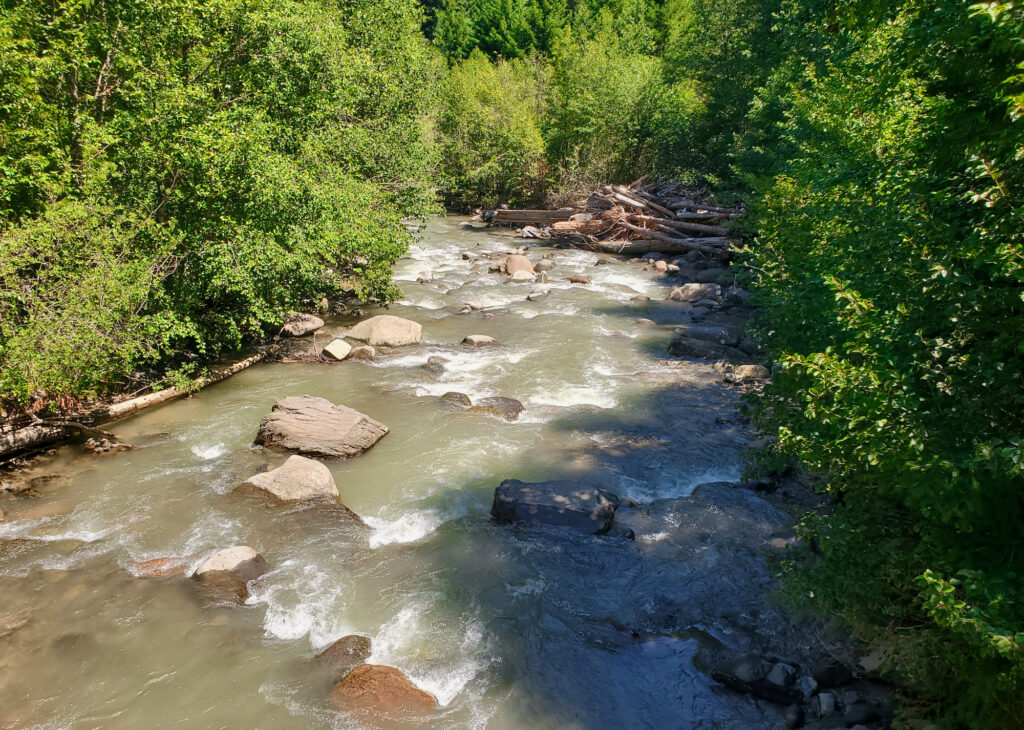
This piece originally appeared in The Daily Emerald on April 27, 2026. WaterWatch staff photo of the East Fork Hood River by Tommy Hough.
 Get your edition of this framed Willamette River print, they won’t last long! Dan Coe prints are available by: