
This article appears in the fall 2026 issue of WaterWatch of Oregon’s Instream newsletter.
After 23 years of blood, sweat, tears, and treasure for WaterWatch, I am in the process of doing what few have done before. I have retired from WaterWatch. It can be done, but one has to be willing to let some things go. It’s like meditation — you notice, and you let things be.
WaterWatch is in great shape. The staff, as it has been for years, is very strong. The board is excellent, with several seasoned veterans and new members who bring fresh ideas and vitality to the mission. Membership is strong and expanding. Philanthropy is an ever-evolving challenge to navigate, but the organization is on a solid financial footing and WaterWatch’s development infrastructure is in good shape.
When I arrived at WaterWatch in the early aughts, I was completely new to fundraising. In the early days, I focused primarily on policy, practicing law as a lawyer for WaterWatch first and taking care of other matters around the edges. This was a recipe for failure — not at the law or policy part, but for the organization. I’ll never forget how I spent the afternoon Lehman Brothers collapsed wondering if we would make payroll. It was an inflection point for me and for WaterWatch.
With the help of Gary Hibler, who had recently arrived on the board, I realized the executive director had to focus on the infrastructure and fiscal health of the organization first, second, and maybe third too. I realized no money meant no mission. The point was to create an environment where others could flourish and kick butt for the mission. And so, with a changed focus and a lot of help, WaterWatch took off on over a decade of double-digit annual growth as we tripled staff and budget — and the law and policy components didn’t suffer either. Our attorneys won every appellate case they prosecuted in Oregon for over two decades, setting landmark precedents for Oregon’s waters and agencies in the process.
There were some interesting times and negotiations in those two plus decades. A lot of sleep lost. A lot of respect for my co-workers and their competence and amazing persistence. It was always a giant privilege to work with WaterWatchers. Water deals, dam removals, legislation — they all produced memorable moments, occasional threats and satisfying results. Reflecting on the years of advocacy I am just so honored and proud to have been associated with the staff and board of WaterWatch. These are amazing advocates who give me hope in dark times and deserve our full support.
Unfortunately, in the brief time before and since I’ve been retired, the federal government has lost its conservation and environmental protection marbles, and is working to roll back the Endangered Species Act, repeal the Roadless Rule, dismantle the Columbia Basin Restoration Initiative, trot out various plans to liquidate public lands, repeal limits on greenhouse gas emissions from coal and gas fired power plants, end the CAFÉ standards for automobiles, and more. Given the current hostility to healthy rivers, biodiversity and conservation, WaterWatch is more important than ever. Please join me in supporting this transformative organization. Simply put, there is no more effective organization for Oregon’s waters and rivers.
As for me, as one of my favorite musicians sings, “I won’t be here, but I’ll never be far.”
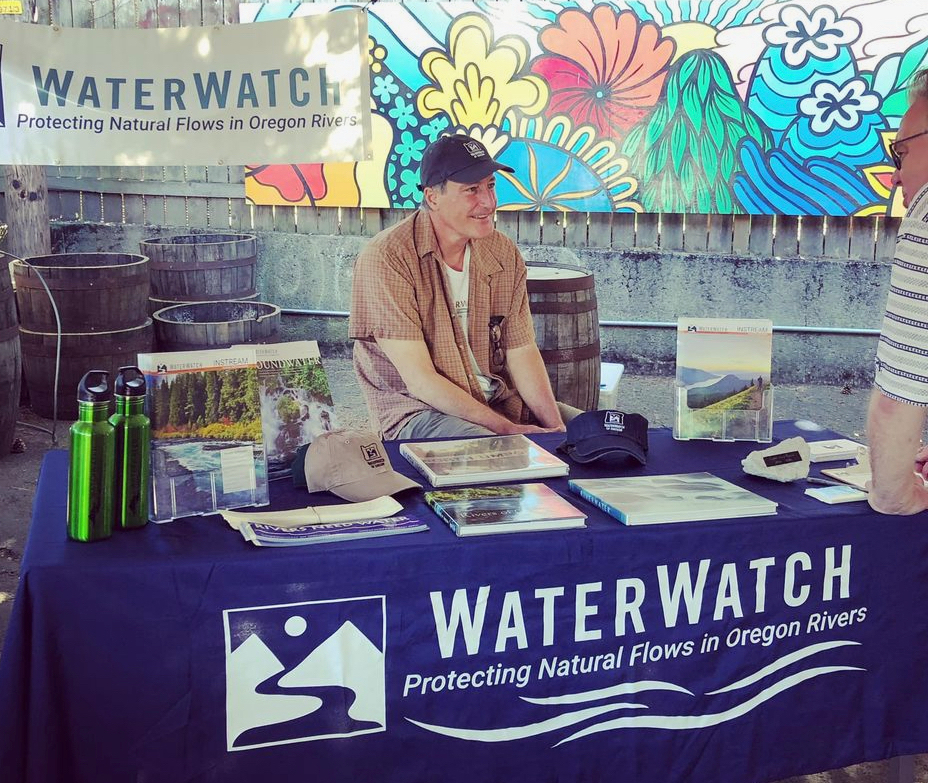
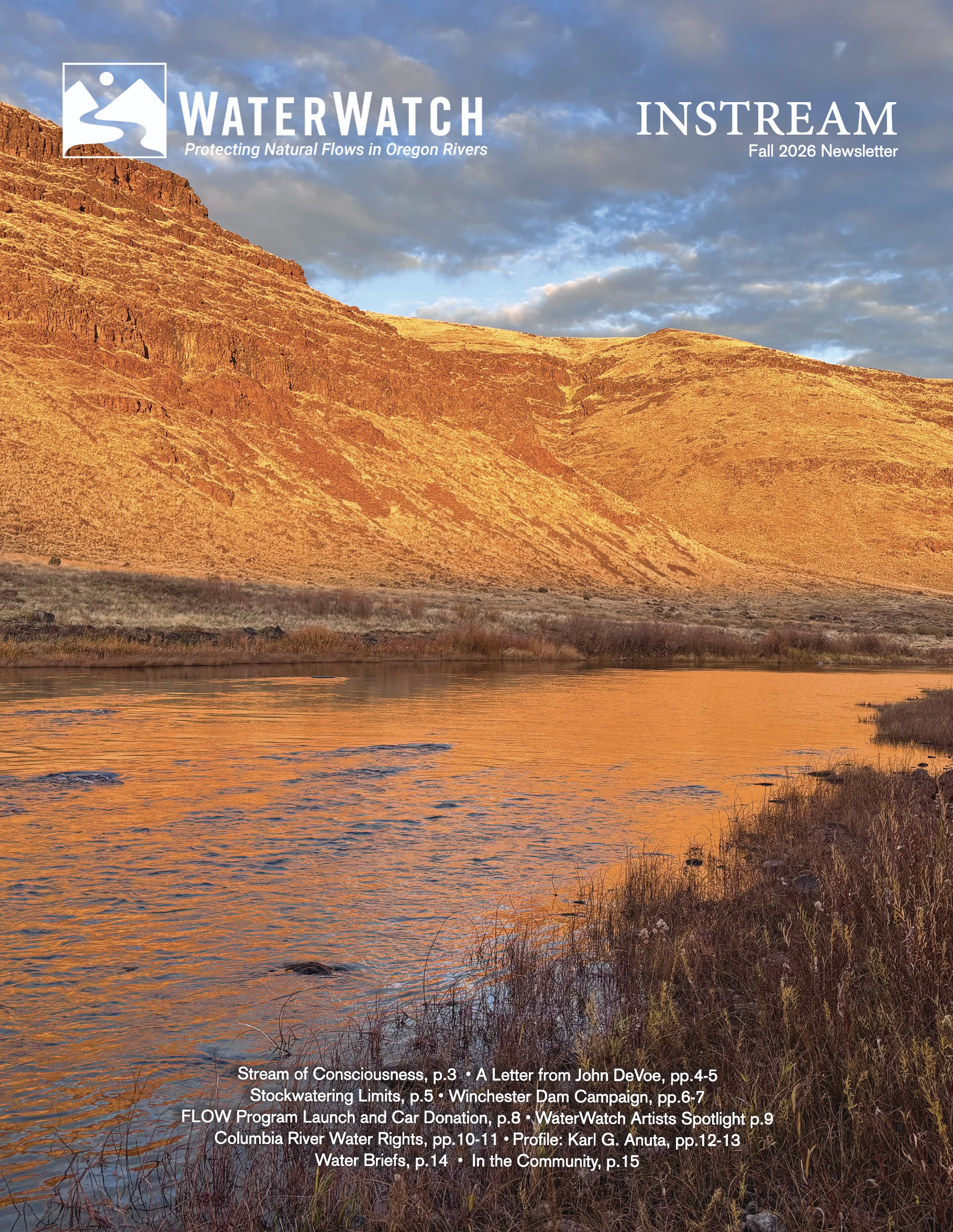
Banner photo of John DeVoe by Monet Hampson, John Day River Instream cover photo couresy of Andy Archer, Instream cover design by Monet Hampson.