
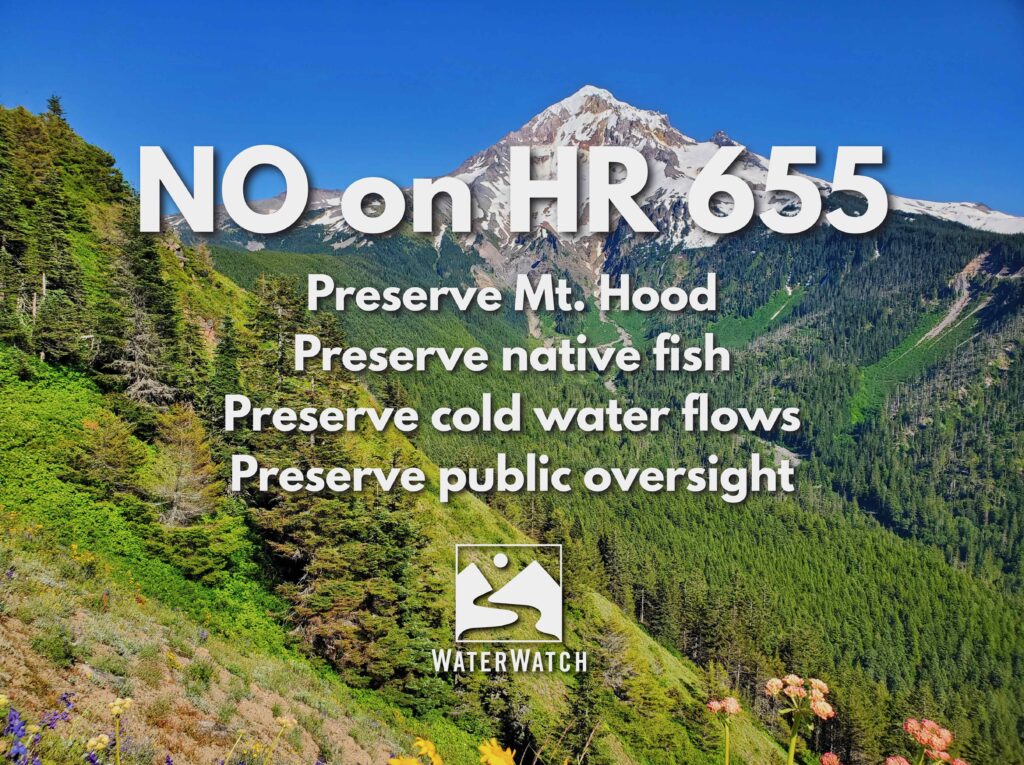
Representative Cliff Bentz’s (OR-2) bill to transfer 150 acres of federal public lands from the Mt. Hood National Forest to the City of The Dalles to support the expansion of that city’s Google data center campus is still before the Senate Natural Resources Committee. Please take a moment to weigh in with testimony to stop the public land grab that puts the rivers, fish, forests, and wildlife of the Mt. Hood National Forest at risk.
- Feb. 18, 2026, coalition letter opposing HR 655.
- Feb. 18, 2026, press release detailing coalition opposition to HR 655.
- Instream article: Data Centers Present New Challenges for Oregon’s Waters
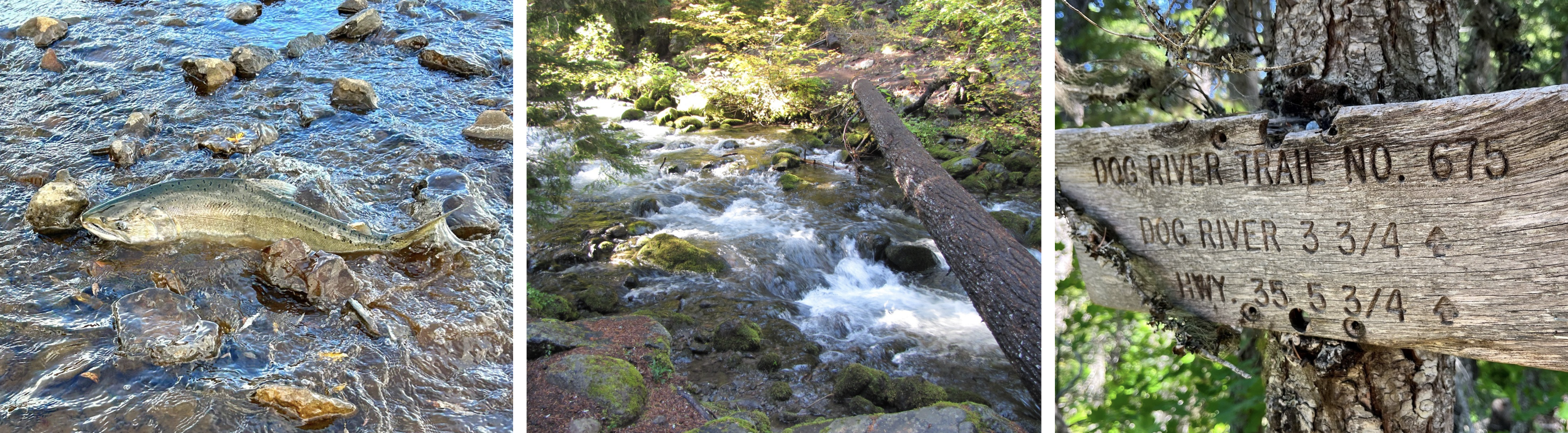
In December 2025, when Representative Cliff Bentz (OR-2) secured passage of his bill HR 655 in the U.S. House of Representatives to transfer 150 acres of federal public land from the Mt. Hood National Forest to the City of The Dalles, including water from the Dog and Hood rivers that flow from Mt. Hood and, eventually, into the Columbia River, his office bragged about it in a press release.
WaterWatch took notice, and in February 2026 a coalition led by WaterWatch also issued a press release, along with a letter to U.S. Senators Ron Wyden and Jeff Merkley, to ensure they knew about our coalition’s opposition to HR 655, its impact on the Hood and Dog rivers and five runs of endangered salmon and steelhead, the terrible precedent it would set for our federal public lands, and its erosion of public oversight and involvement.
As the public learned more about the unprecedented public land “transfer” and change in ownership facilitated by HR 655, and the way in which the legislation would enable The Dalles to sidestep federal reviews of their growing water infrastructure — which includes a six-building Google data center campus with skyrocketing energy and water demands — awareness and opposition was also growing among Americans to out-of-control tech giants building data centers throughout the country, depleting water supplies and aquifers along the way, and frequently earning over-the-top tax breaks from communities enchanted by vague promises of wealth and employment.
Today, Representative Cliff Bentz is no longer bragging about his authorship of HR 655. In fact, he’s become downright silent about his bill. Because Oregonians from Prineville to Boardman to Hillsboro loathe the idea of “transferring” our federal public lands and beloved Mt. Hood National Forest to ensure a data center complex owned by the biggest corporation in the world doesn’t have to follow the rules, work with federal agencies, or deal with a cranky public in acquiring water. The story is no different with Meta and X and Amazon around the state, but only in The Dalles is an outright land grab of our public lands not only being suggested, but two votes away from the president’s desk.
While we were disappointed to learn HR 655 was granted a hearing over the summer in the Senate Subcommittee on Public Lands, Forests, and Mining, which falls under the Senate Energy and Natural Resources Committee, it has provided an opportunity for the public to weigh in with the Committee on our opposition to HR 655.
Senator Wyden serves on the Senate Energy and Natural Resources Committee, and indicated his opposition to HR 655 and tacit commitment to vote against it in a social media post shared by his office on Aug. 12th — one day before an anti-HR 655 rally at his Portland office that WaterWatch’s Tommy Hough and Monet Hampson, among others, attended and spoke at.
Using the letter below as a “copy and paste” template, please submit your testimony opposing HR 655 to the Senate Energy and Natural Resources Committee. The email address to send it to is fortherecord@energy.senate.gov.
Be sure to include your name and address, and note that your testimony is in response to HR 655 and the July 15th subcommittee meeting on the bill. Please urge the Committee to oppose HR 655 and its reckless impacts on fish, cold water flows, public land, and public oversight.
Dear Chairman Barrasso, Ranking Member Cortez Masto, and Members of the U.S Senate Subcommittee on Public Lands, Forests, and Mining,
I am an Oregonian, and I oppose HR 655. The proposed transfer of 150 acres of federal public land from the Mt. Hood National Forest to the City of The Dalles is terrible policy that sets a terrible precedent.
This bill is an end-run around public engagement and oversight, and an attack on water, forests, public lands, and the protection of endangered species that puts the interests of a wealthy corporation and their political allies ahead of the interests of everyday Oregonians.
The rules that safeguard Oregon’s salmon, water, and outdoors are not simply “red tape” to be eliminated in the name of expediency. They exist for a reason. Circumventing them in HR 655 is unacceptable.
We urge you to stand with Oregonians and the rules that protect our fish, water, conservation values, and the ability for the public to participate in decisions affecting public lands. These rules are vital to preserving the natural treasures that make Oregon a special place to live, work, and raise a family.
Please reject passage of HR 655.
Thank you for your consideration.
Sincerely,
[ your name ]
[ your mailing address ]
As detailed in our Instream newsletter, a junior instream water right on the Dog River and tributary to the Hood River that supports multiple runs of Endangered Species Act-listed fish will be significantly impacted by HR 655 should it pass and become law. We cannot let this occur.
Please share this with your family and friends and take action NOW to help WaterWatch and our allies advocate for fish, cold water, and Mt. Hood. A committee vote on HR 655 is expected soon.
Banner photo of the Mt. Hood Wilderness and triptych photo of Cold Spring Creek (East Fork Hood River tributary) by Tommy Hough; salmon photo courtesy of Mark Hereford / Oregon Department of Fish and Wildlife; Dog River trail sign photo courtesy of the Mt. Hood National Forest / USDA.
 Get your edition of this framed Willamette River print, they won’t last long! Dan Coe prints are available by: